Most underwater robots are too loud for the life they study.
Propellers create noise, turbulence and a rigid hull that animals avoid. Researchers end up observing a disturbed ecosystem, we observe an undisturbed one.
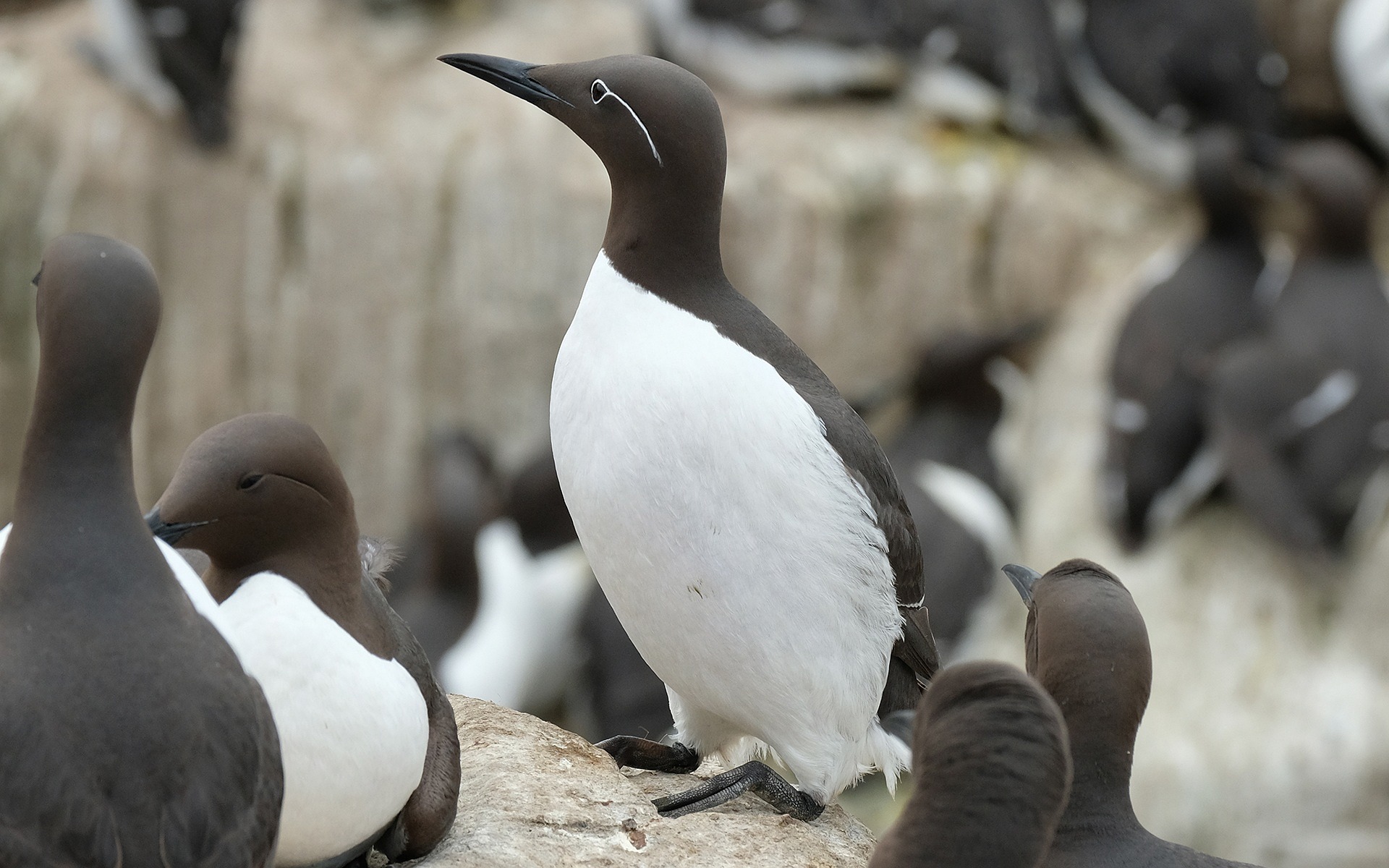
Guillemots (lomvi in Norwegian), the robot's namesake
Wings, not propellers.
Flapping wings for thrust, a compliant body for gentle contact, and onboard autonomy for long missions.
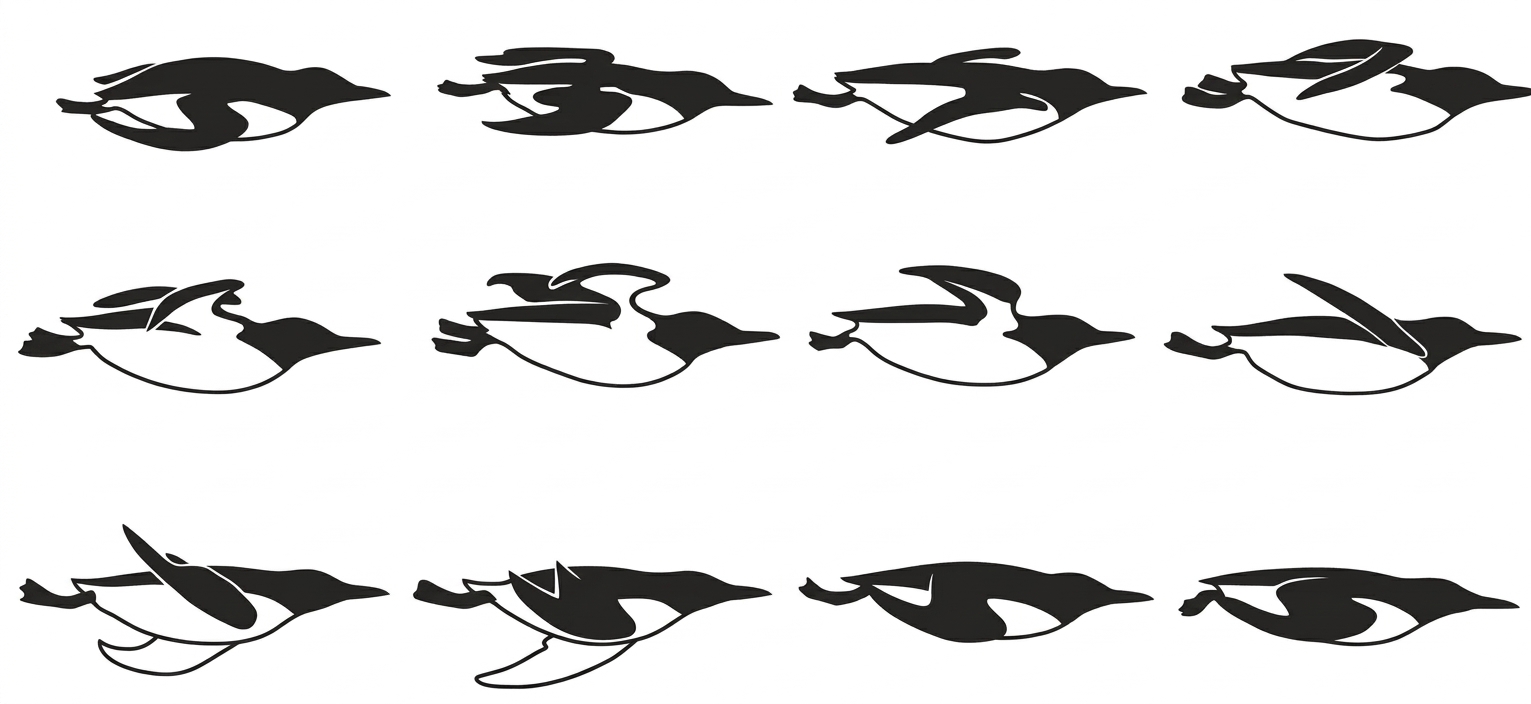
Guillemot wingstroke sequence, the reference for Lomvi's wing motion · Source: R. J. Lock, R. Vaidyanathan & S. Burgess, Morphing modes of mobility in natural and engineered systems, Department of Mechanical Engineering, University of Bristol
-
Flapping wings
Two wings modelled on the guillemot generate thrust and steering. No propeller, no wake of noise.
-
Soft body
Compliant structures absorb contact and move with the water, making the robot gentle around animals and habitats.
-
Autonomous navigation
Onboard monitoring and control let Lomvi run long observation missions without human intervention.
PlaceholderGILMO v1
A robot the water barely notices.
Lomvi navigates on its own and gathers observations over long periods, without a diver or a pilot. Quiet enough to stay close, soft enough to be safe around aquatic life.